



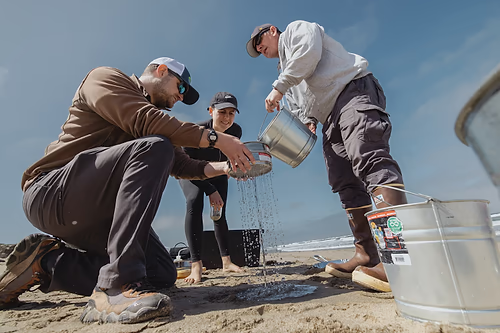

Where small fishing communities clash with industrial fleets
Researchers developed a new global index to understand how and where conflict between small-scale and industrial fisheries poses the greatest threat to communities.
November 10, 2026 • Fisheries and aquaculture, Ocean governance, Policy
By Kelsey Healey, University of Massachusetts Dartmouth
In brief
- Nearly half a billion people worldwide rely on small-scale fisheries for food or livelihoods, but many face escalating competition from industrial fishing fleets.
- A new study finds the risk of conflict is highest where small-scale fisheries are most critical, especially for nutrition, and where national governance is weakest.
- The study also identifies countries with unexpectedly low risk for conflicts between industrial and small-scale fisheries, offering insights that can inform proactive policy and management.
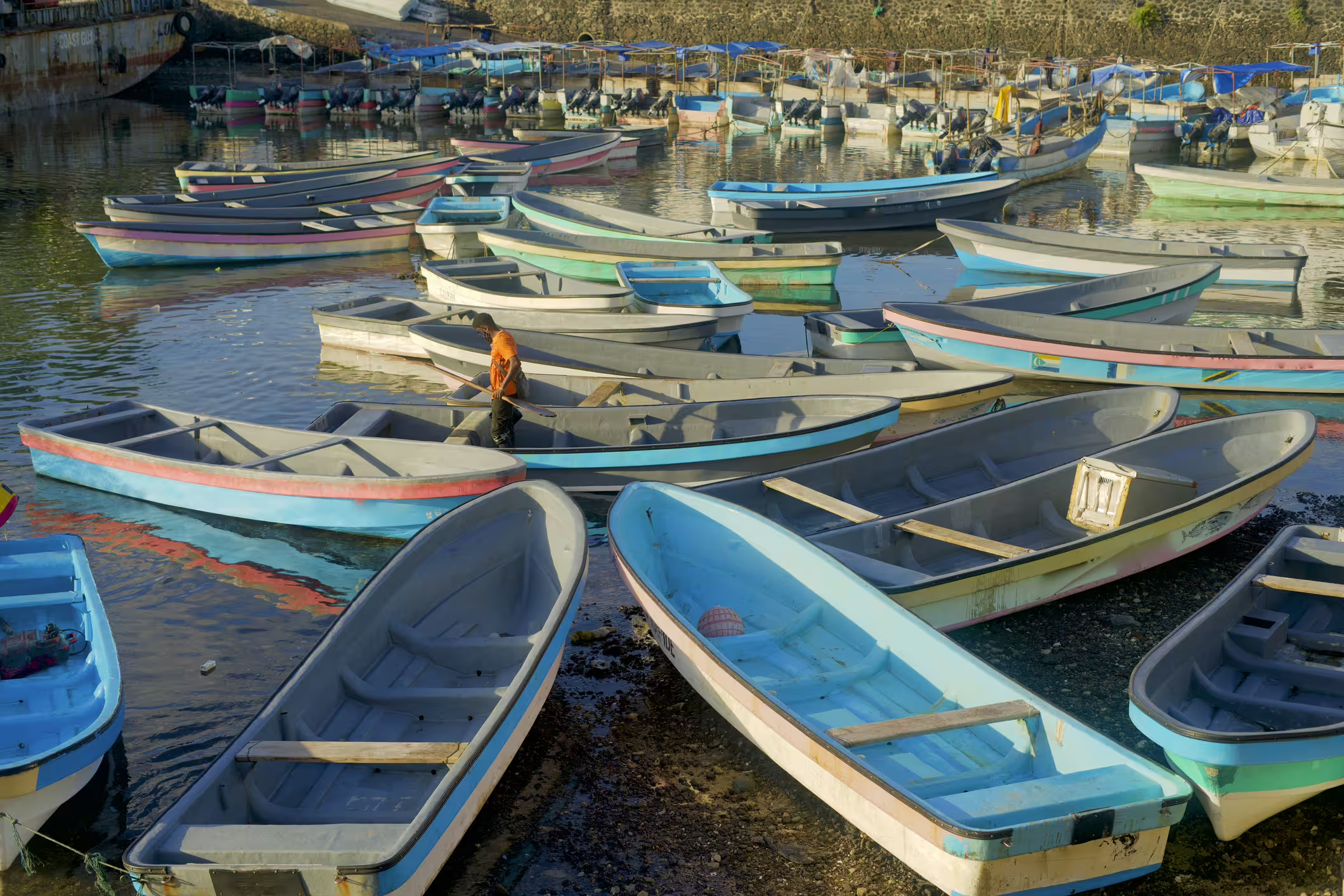
Small-scale fishing operations are central to the way of life for nearly half a billion people worldwide, providing income, food security, and cultural identity.
However, many small-scale fishers face escalating competition from large-scale industrial fishing fleets, increasing the risk for conflict and negative interactions. Such interactions pose an existential threat to coastal fishing communities and can also destabilize marine ecosystems and lead to conflict between countries.
A new study published in Nature Food maps global hot spots where small-scale fishing communities are most vulnerable to these conflicts.
Using a new global index to assess vulnerability across 126 coastal countries, researchers found that risk of conflict is greatest for countries in Africa, followed by parts of Oceania and Asia, particularly in countries where communities rely heavily on small-scale fisheries for food and livelihoods and have limited capacity to respond to disruptions.
The researchers also identified some outlier countries with unexpectedly low risk for conflict, offering insights that can inform proactive policy and management. These outlier countries include Comoros, Libya, Yemen, Greece, and the Solomon Islands.
“Conflict among large-scale fisheries and small-scale fisheries has been a topic of high importance for coastal fishers around the world for more than thirty years, and to our knowledge this is the first global study to start directly addressing it in a constructive manner,” said senior study author Xavier Basurto, a professor of environmental social sciences at the Stanford Doerr School of Sustainability.
At the January 2024 meeting of the United Nations Food and Agriculture Organization (FAO) Sub-Committee on Fisheries Management, delegates acknowledged these risks and explicitly urged nations to address potential conflict between small- and large-scale fishing operations. The new global index provides important context and data that can help countries fulfill this recommendation.
“Conflict with industrial boats is a problem that small-scale fishers often raise, but it is difficult to study systematically because it takes so many forms,” said lead study author Melissa Cronin, an assistant professor of fisheries oceanography at University of Massachusetts Dartmouth. “Understanding these conflicts matters because they shape people’s livelihoods and the prospects for sustainable fisheries.”
Conflict among large-scale fisheries and small-scale fisheries has been a topic of high importance for coastal fishers around the world for more than thirty years
Xavier basurto, Professor of environmental social sciences
Countries with weaker governance tended to be more vulnerable to interactions between industrial and small-scale fisheries, largely through greater dependence on small-scale fishing for food and livelihoods. These findings suggest that addressing vulnerability requires both effective fisheries governance and support for the communities most dependent on these resources.
The findings highlight the need for local case studies to understand how global patterns play out in fishing communities. “Our analysis helps identify where vulnerability may be greatest, but it cannot tell us when competition becomes conflict or who bears the costs,” said Cronin. “For that, we need to work directly with fishing communities to understand their experiences and identify solutions that fit the local context.”
“This study is extremely useful for informing fisheries management and conservation in practice,” said Elena Finkbeiner, director of coastal community fisheries at Conservation International and associate professor of practice at University of California Santa Cruz. “It provides us with a blueprint of critical geographies to prioritize holistic conservation and management efforts where small-scale and large-scale fleets are competing for the same resources, using the same coastline, or entering the same markets.”
This story was adapted from a press release originally published by the University of Massachusetts Dartmouth.
Basurto is also a professor (by courtesy) of oceans and a senior fellow (by courtesy) at the Woods Institute for the Environment, both in the Stanford Doerr School of Sustainability.
Cronin and Basurto are also affiliated with Duke University. Study authors not mentioned above are affiliated with Conservation International, Duke University, Georgetown University, Lancaster University, and Michigan State University.
The study is a product of the Illuminating Hidden Harvests initiative, which has been funded by the Norwegian Agency for Development Cooperation, the Swedish International Development Cooperation Agency, Oak Foundation, and CGIAR Trust Fund, with support from the CGIAR Research Program on Fish Agri-Food Systems. Funding for the study was provided by the Cedar Tree Foundation and the Smith Conservation Research Postdoctoral Fellowship Program.