
2023-2025 Fellows
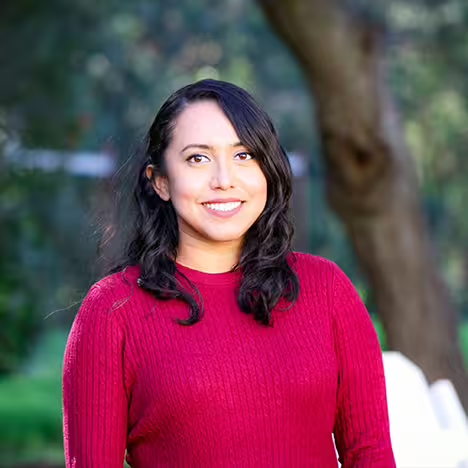
Areidy Beltran-Peña
Noah Diffenbaugh Lab
Earth System Science
Areidy Aracely Beltran-Peña holds a Ph.D. in Environmental Science as well as a Bachelor’s degree in Environmental Earth Science and a Master’s degree in Earth and Planetary Science all from the University of California, Berkeley. Her research focuses on assessing the impacts of climate change on water resources and agricultural systems using integrated assessment and Earth system models at global and regional scales. As a Stanford Doerr School of Sustainability Dean’s Postdoctoral Fellow, Areidy will work with Professor Noah Diffenbaugh to develop a climate risk assessment framework for agriculture and energy systems reliant on mountain snowpack and precipitation under global warming. Her research will identify opportunities to adapt water-energy-food systems to changes in snow hydrology and precipitation regimes in a possible future with extreme precipitation and reduced snowpack. Her work will provide stakeholders and managers in the water, agricultural, and energy sectors with high-resolution data and climate risk reports, enabling a coordinated, integrated approach to building climate resilience in California. Areidy is the first in the history of her family to accomplish these educational milestones. She is passionate about inspiring other students to pursue higher education through outreach initiatives, including invited talks, active mentoring, and research. Her number one message to them is “Si se puede!” – encouraging them to believe in themselves and reach for the stars.
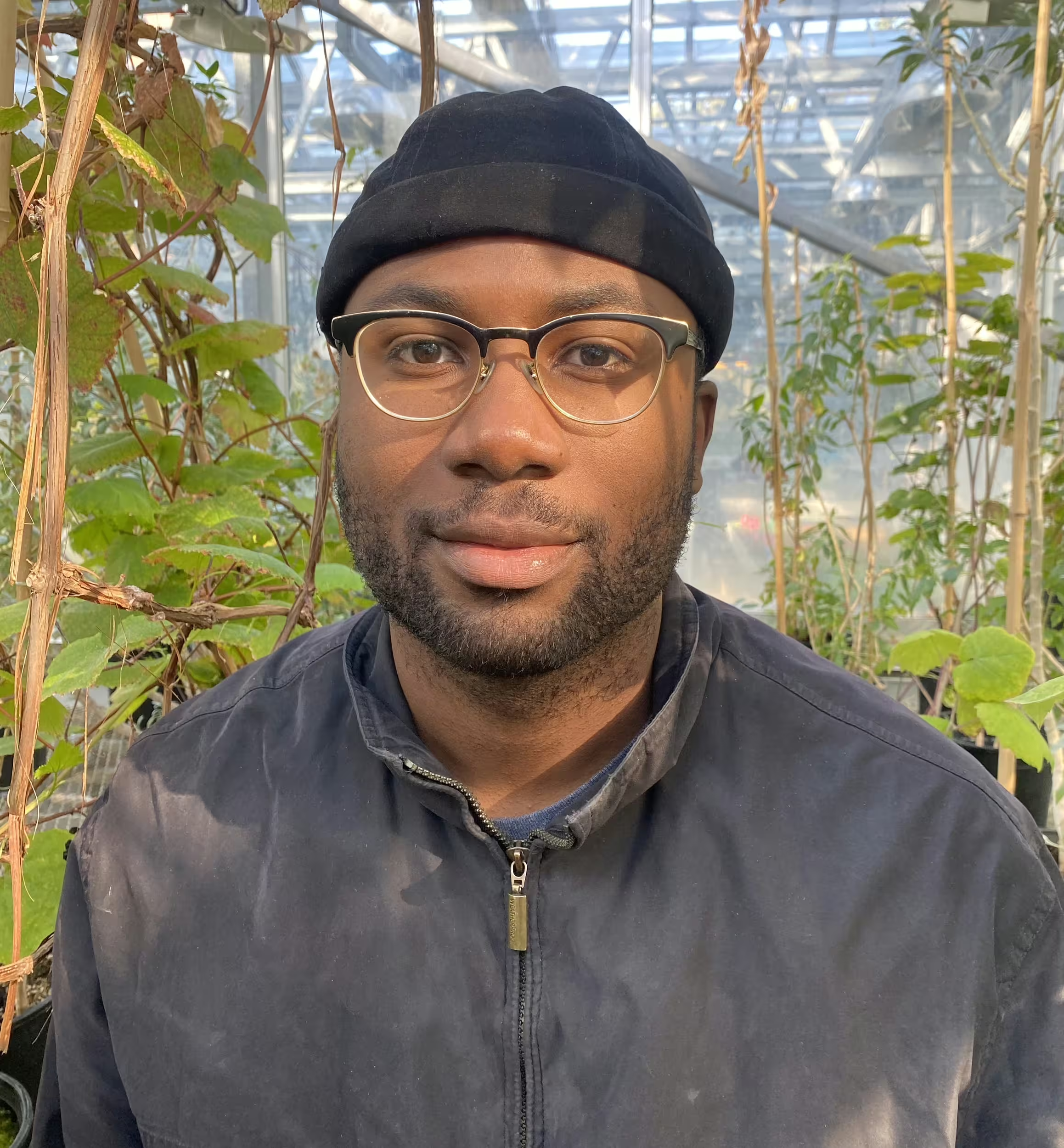
Marvin Browne
Alexandra Konings Lab
Earth System Science
Marvin is a plant physiological ecologist whose research operates at the intersection of plant physiology and the remote sensing. He is a first-generation Trinidadian-American raised in Washington, DC. Growing up in Trinidad and Tobago, and DC, he was introduced to the beauty and diversity of our world’s plants, which encouraged him to pursue Biology. He earned a bachelor’s degree from Occidental College and will receive his PhD from the University of California Los Angeles’ Ecology and Evolutionary Biology department. As an undergraduate, he studied vulnerability of Costa Rican bromeliads to drought. In his dissertation, he aims to better understand variation in plant responses to drought and the implementation of remote sensing tools to scale drought responses from leaves to ecosystems. As climate change continues to challenge ecosystems globally, he strives to demonstrate the importance of bridging multiple scientific disciplines to improve ecosystem health. As a Stanford Doerr School of Sustainability Dean’s Postdoctoral Fellow, Marvin will be (1) developing novel tools for remotely sensed drought tolerance for entire ecosystems to characterize across-canopy and -species variation, (2) assessing variation in estimates of ecosystem water status and drought tolerance traits across time and space, and (3) providing implications for ecosystem functioning and vulnerable forests (e.g., wildfire prevalence, variation in species’ resilience lending to variation in species turnover). He looks forward to connecting with the Stanford community and supporting efforts to embrace diverse ideas and people.
Zhi Li
Steven Gorelick Lab
Earth System Science
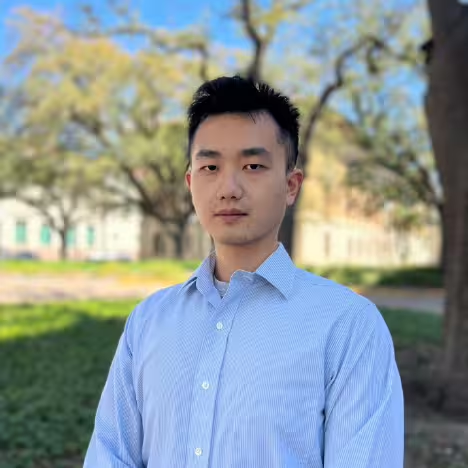
Zhi Li is a dedicated and passionate hydrologist who grew up in an indigenous community in China. This unique upbringing instilled in him a strong sense of responsibility to give back to society and contribute towards a sustainable future for all. After pursing his passion for water resources, Zhi went on to earn a PhD in hydrology from the University of Oklahoma. Having experienced the effects of flooding firsthand, Zhi has committed his work to developing innovative flood models and studying the impacts of climate change on local communities, particularly in terms of flooding. His research is both policy-oriented and decision-driven, focusing on the marginalized communities who are often disproportionately affected by such events. Recognizing the importance of engaging with those affected most by climate change, Zhi has been working closely with Tribal Nations in Oklahoma and Florida in his research. Through collaboration and knowledge-sharing, he aims to create well-informed policies and strategies that protect and empower vulnerable communities. As a Stanford Earth Postdoctoral Fellow, he will further his research by utilizing remote sensing data to provide unbiased flood risk assessments in data-scarce regions. By employing granular flood models, he will assess local flood risks with increased accuracy and precision. He is committed to focusing on marginalized communities around the globe, and seeks to co-produce actionable science that benefits these vulnerable populations.
2021-2023 Postdoc Fellows
Pedro M. Monarrez
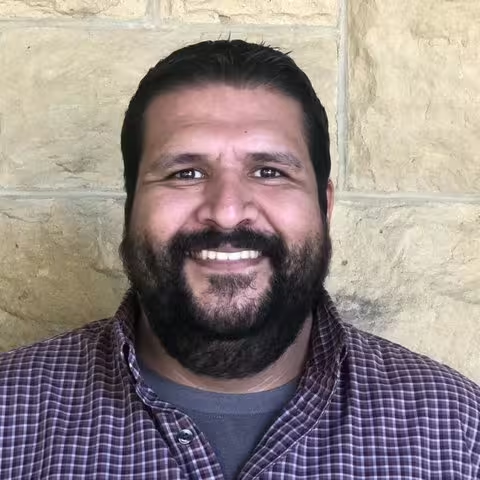
I am a first-generation Mexican American originally from Los Angeles, California, where I was born and raised. After being initially interested in marine biology, I decided to pursue geology as a major after watching the movie, Dante’s Peak, when I was in high school. I attended Cal State Fullerton, where I could work and pay for my tuition while majoring in Geological Sciences. As an undergrad, I developed a passion for marine paleobiology and decided to pursue that as a career after participating in an NSF REU at the University of North Carolina, Wilmington. After earning my B.S., I stayed at Cal State Fullerton where I earned my Master’s degree. For the next two years, I split my time between living in Panamá working for the Florida Museum of Natural History and working in paleontological resource mitigation in Southern California. I then went on to earn my Ph.D. from the University of Georgia.
As a paleobiologist, I am interested in understanding the interplay of abiotic and biotic factors in shaping the history of marine life. I seek to reconstruct the habitats and environmental conditions in which ancient organisms lived in by applying sequence stratigraphic principles and ecological theory at the local and regional scale. I also work with large fossil databases to assess the underlying drivers of macroevolutionary patterns at the global scale, which has the been the primary focus of my research at Stanford using marine animal body size. As a Stanford Earth Postdoctoral Fellow, I will work with Erik Sperling and Jonathan Payne to use physiological modeling based on organisms’ metabolic demand to determine if it can explain body size trends of marine animals in the fossil record.
Carlos Gould
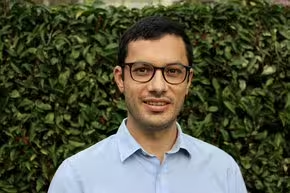
Carlos Gould earned a bachelor’s degree from Yale University and will receive his PhD in Environmental Health Sciences from Columbia University. His research focuses on the potential for household energy transitions to address climate change and improve health by reducing air pollution exposure. In his dissertation, Carlos studies the impact of Ecuador’s nationwide transition from biomass to gas cooking, facilitated by long-standing subsidies, on air pollution exposure and children’s health. Weaving together tailored energy access surveys, state-of-the-science sensor, and administrative data, Carlos’s work shows that despite cheap and accessible cooking gas, a large portion of Ecuadorian households still use biomass for some of their daily cooking and heating needs, leading to air pollution exposure above health-based guidelines. Nonetheless, he shows that Ecuador’s investments in cooking gas subsidies over the last three decades have facilitated reductions in lower respiratory infection mortality among children under 5 years. As a Stanford Earth Postdoctoral Fellow, Carlos will investigate (1) the impacts of India’s ongoing clean cooking transition on air quality, health, and climate and (2) the health and climate benefits of clean-to-cleaner fuel transitions (e.g., from gas to renewable-based electricity). He looks forward to joining the Stanford community and is committed to advancing diversity, equity, and inclusion throughout the University through service, mentorship, teaching, and research.
Claudia Avila
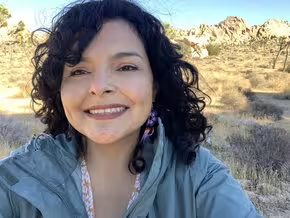
Claudia Christine E. Avila is a soil biogeochemist studying soil carbon dynamics in agricultural soils. She is a chicana from Fontana, CA and a long-time resident of the Inland Empire. She was a community college transfer student at UC Riverside, where she got her bachelor’s degree in Environmental Sciences and where she will also be receiving her PhD this Spring. While finishing up graduate school, she became a mother and a part time instructor at her alma mater, Riverside City College, and at Cal State University San Marcos teaching Environmental Sciences/Studies and Biology. Throughout this fellowship, she will be disentangling the role of soil carbon in the release of naturally occurring contaminants in the Central Valley that ultimately harm drinking water resources. She is incredibly passionate about community-led research that follow indigenous frameworks and transformative justice in all levels of academia.