
CEE 269B EnvEng Seminar - Jeremy Guest "Charting Technology Development Pathways for a Circular Bioeconomy"
Event Details
Abstract: With population growth, urbanization, and rapidly changing environments, challenges to meeting basic human and societal needs are becoming increasingly complex. In many cases, the 20th century model of environmental technologies and infrastructure systems – often characterized by robust but inflexible components that are energy- and chemical-intensive – is no longer viable. Moving beyond maximizing efficiencies and minimizing cost, industries are seeking technological solutions that will meet societal needs in a way that is financially viable while supporting the pursuit of broader goals for sustainability (e.g., carbon neutrality, resource circularity, equity). This transition has become a catalyst for research and development, but a critical challenge to achieving rapid and transformative innovations has been the expansive landscape of technology development pathways and the lack of a transparent and consistent framework to target investment.
In this presentation I will introduce our work to advance the circular bioeconomy through the recovery of resources (nutrients, energy, water) from wastewaters and through the biological conversion of renewable feedstocks into bioenergy and bio-based products. Using a structured analytical approach – Quantitative Sustainable Design (QSD) – and our open-source software platforms (QSDsan and BioSTEAM), we identify, prioritize, and pursue opportunities for innovation to advance novel technologies and infrastructure systems. I will introduce the QSD process, including (i) establishing the simulation space, (ii) modeling construction, operation, and maintenance under uncertainty, (iii) tracking progress toward goals across multiple dimensions of sustainability (e.g., economic, environmental, health), and (iv) prioritizing research, development, and deployment pathways. Using examples from our recent work, I will demonstrate how we leverage this approach to guide investment in non-sewered sanitation technologies and in precision fermentation for biomanufacturing. Finally, I will highlight my group’s broader portfolio of work (including experimental work to advance algal wastewater treatment) and vision to advance the circular bioeconomy through renewable resource recovery from wastewaters and the conversion of renewable (plant- or human-derived) resources.
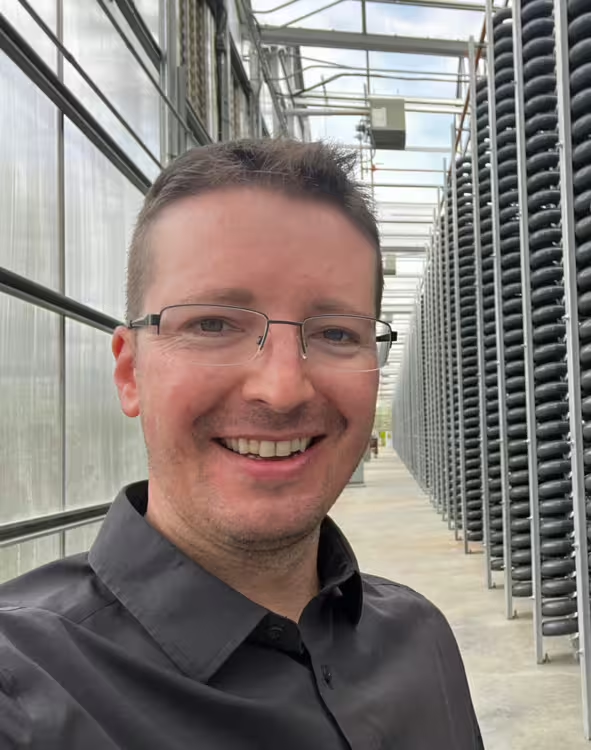
Bio: Dr. Jeremy Guest is an Associate Professor and the David C. Crawford Faculty Scholar in the Department of Civil and Environmental Engineering at the University of Illinois Urbana-Champaign (UIUC). The core goal of Professor Guest’s group is to advance circular bioeconomies to achieve equitable, healthy, and prosperous communities while simultaneously enhancing the ecosystems that support them. His group makes progress toward this goal on two fronts: (i) increasing access to and the sustainability of sanitation in both developing and technologically advanced communities, which they pursue by developing technologies and service delivery models that manage sanitation media (i.e., human bodily excreta) as a renewable resource; and (ii) expediting the research, development, and deployment of technologies that advance the sustainability of agriculture and the conversion of plants to bioproducts, biofuels, and nutritious foods. Central to their work is Quantitative Sustainable Design (QSD), a structured methodology to inform engineering, investment, and policy decision-making.
Professor Guest currently serves as the Associate Director for Research for the Institute for Sustainability, Energy, and Environment at UIUC and as the Sustainable Design Lead for the Center for Advanced Bioenergy and Bioproducts Innovation (CABBI, a Bioenergy Research Center funded by the U.S. Department of Energy, DOE). He is the recipient of a National Science Foundation (NSF) CAREER Award, the 2016 recipient of the Paul L. Busch Award for innovation in applied water quality research from the Water Research Foundation, and the 2021 James J. Morgan Environmental Science & Technology Early Career Award for creativity and leadership in his field. His research has been sponsored by a number of agencies including the NSF, the U.S. DOE, BioMADE, the U.S. Environmental Protection Agency, the U.S. Department of Agriculture, the U.S. Agency for International Development, and the Bill & Melinda Gates Foundation, among others. Professor Guest’s formal training includes a B.S. and M.S. in civil engineering from Bucknell University and Virginia Tech, respectively, and a Ph.D. in environmental engineering from the University of Michigan.