






Shimizu Visiting Professor, Caitlin Mueller: "Shaping Performance in Architecture"
Event Details
Abstract:
The environmental impact of construction is one of the defining challenges for architecture today. Buildings produce nearly forty percent of global carbon emissions, a growing proportion of it from materials and construction separate from operation. This positions architectural design, through its choices of form, structure, and material, as a powerful lever for reducing impact. When performance is treated as a creative framework rather than a constraint, architecture can contribute to decarbonization while expanding the possibilities of design.
This talk will demonstrate how emerging computational and fabrication tools are transforming what is possible in the pursuit of low-carbon design. Projects use generative and multi-objective design methods to balance structural efficiency, spatial quality, and environmental performance. Advanced analysis and simulation are integrated directly into design workflows through interactive interfaces that connect geometric exploration with performance feedback. Digital fabrication and robotic assembly techniques show how complex, optimized forms can be built economically and with less waste. Across these examples, new material reuse and circular construction strategies link computation to real-world supply chains and evolving policies on embodied carbon, underscoring the growing agency of design in climate action.
Together, these efforts suggest that responding to the climate crisis is not only a technical challenge but a design opportunity. Digital tools and material intelligence can help create a new architectural language that is playful, expressive, and grounded in a deeper connection between form, performance, and the environment.
Bio:
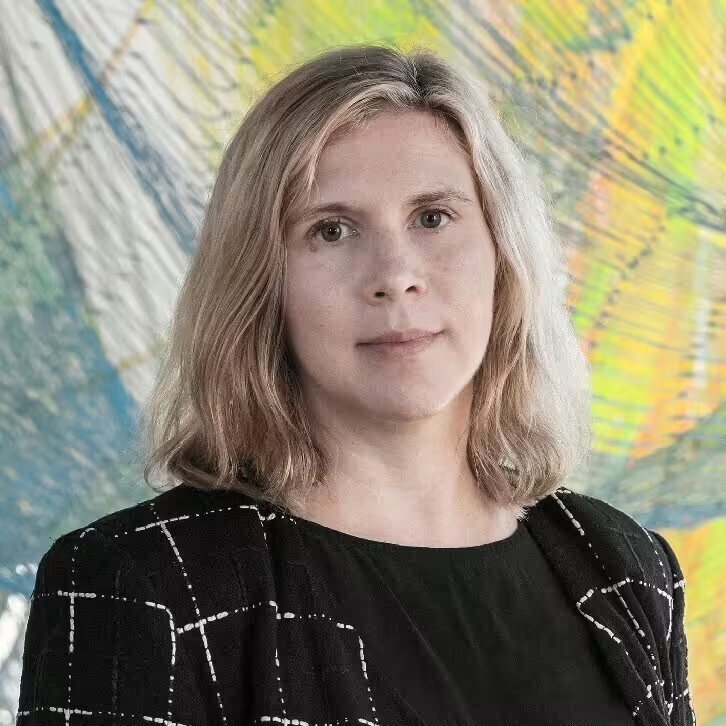
Caitlin Mueller is a researcher, designer, and educator working at the interface of architecture and structural engineering. She is currently an Associate Professor in the Building Technology Program at MIT, where she leads the Digital Structures research group.
As a researcher, Mueller focuses on developing new computational methods and tools for synthesizing architectural and structural intentions in early-stage design. She also works in the field of digital fabrication, with a focus on linking high structural performance with new methods of architectural making. In addition to her digital work, she conducts research on the nature of collaboration between architects and engineers from a historical perspective. Mueller also aims for interdisciplinary learning and integration in her teaching efforts, which include subjects in structural design and computational methods.