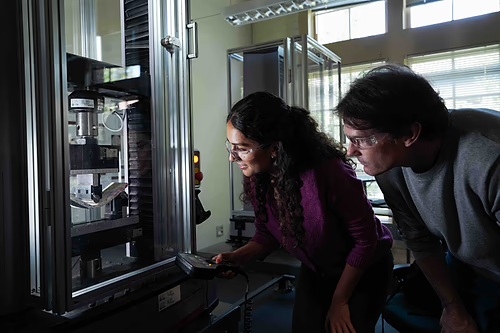
The Stanford Doerr School of Sustainability educates the next generation of leaders to solve our greatest sustainability challenges. Through degree programs spanning engineering, Earth system and planetary science, energy science, social sciences, geophysics, and oceans, students learn, research, and collaborate both on campus and at field sites around the world.
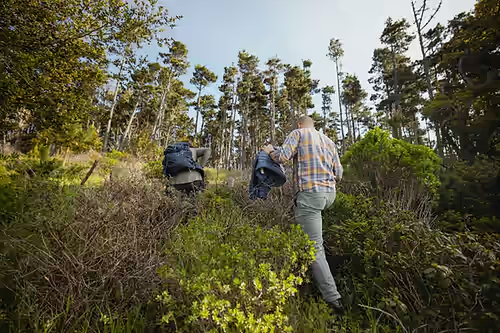
Scholars at the Stanford Doerr School of Sustainability focus on discovery and applied research essential for understanding our world and ensuring a thriving future. Through dedicated funding opportunities and access to cutting-edge facilities, including Hopkins Marine Station on Monterey Bay and the O'Donohue Family Stanford Educational Farm, they pursue bold ideas and turn science into real-world impact.
Research Topics
The Stanford Doerr School of Sustainability launched in 2022 as Stanford's first new school in 75 years, bringing together disciplines to advance the long-term prosperity of humanity and the planet. From making electricity affordable and sustainable for all to designing cities where people and nature thrive, our scholars collaborate across Stanford and the world to build a better future.
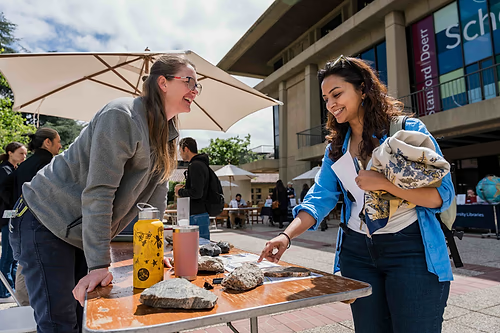
To shape a more sustainable world, the Stanford Doerr School of Sustainability extends learning opportunities and collaboration to students, scholars, solvers, and scalers across the globe. Opportunities include Executive Education, the Sustainability Forum, the Global Sustainability Challenge, Sustainability Undergraduate Research in Geoscience and Engineering, K-12 outreach, and Art and Sustainability.
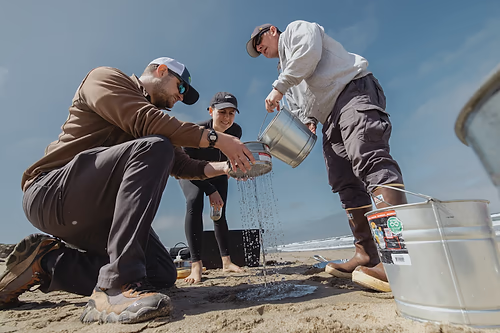
Discover the latest research and insights shaping the future of sustainability. From groundbreaking research and inspiring milestones, to global forums that bring scholars, students, and leaders together, the Stanford Doerr School of Sustainability is a catalyst for innovation, turning bold ideas into lasting impact.
View all news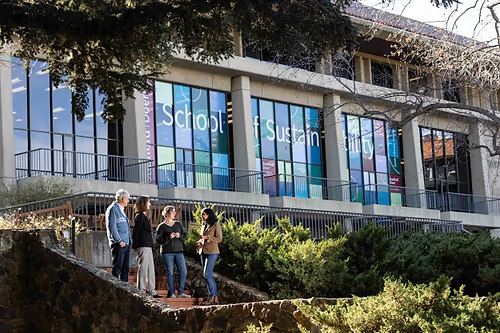
The Stanford Doerr School of Sustainability advances knowledge, solutions, and impact through research and education, creating a thriving, enduring future for humanity and the planet. Its seven departments, two institutes, and Sustainability Accelerator work in concert. Institutes spark innovative environmental and energy research across disciplines, and the Accelerator turns research into scalable technology and policy solutions for urgent global challenges.
During a summer fellowship, Sophia Siegel, BS Earth Systems ’25, MS Earth Systems ’26, helped weigh proposed changes to one of the world’s largest marine protected areas.
Labor abuses remain a challenge in parts of the global fishing industry, especially for migrant workers at sea. Stanford's Center for Ocean Solutions and Center for Human Rights and International Justice partnered with fishers, industry, government, and civil society to develop a digital platform that strengthens accountability.
Disputed access to ocean areas and resources, such as ports or fisheries, are the primary types of conflicts occurring across coastal countries in Africa, highlighting the need for equitable intervention strategies as more industries expand into the ocean.
Domestic vessels account for the majority of port visits globally. Inspecting them in addition to foreign vessels is key to deterring illegal fishing, scientists say.
