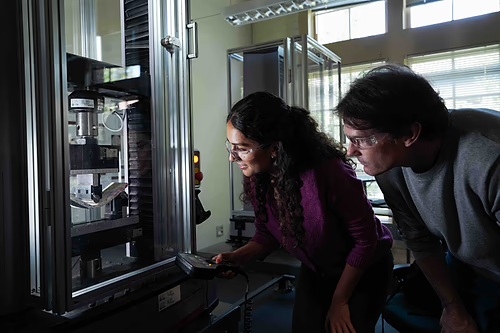
The Stanford Doerr School of Sustainability educates the next generation of leaders to solve our greatest sustainability challenges. Through degree programs spanning engineering, Earth system and planetary science, energy science, social sciences, geophysics, and oceans, students learn, research, and collaborate both on campus and at field sites around the world.
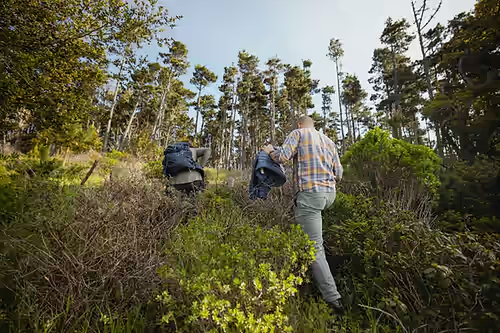
Scholars at the Stanford Doerr School of Sustainability focus on discovery and applied research essential for understanding our world and ensuring a thriving future. Through dedicated funding opportunities and access to cutting-edge facilities, including Hopkins Marine Station on Monterey Bay and the O'Donohue Family Stanford Educational Farm, they pursue bold ideas and turn science into real-world impact.
Research Topics
The Stanford Doerr School of Sustainability launched in 2022 as Stanford's first new school in 75 years, bringing together disciplines to advance the long-term prosperity of humanity and the planet. From making electricity affordable and sustainable for all to designing cities where people and nature thrive, our scholars collaborate across Stanford and the world to build a better future.
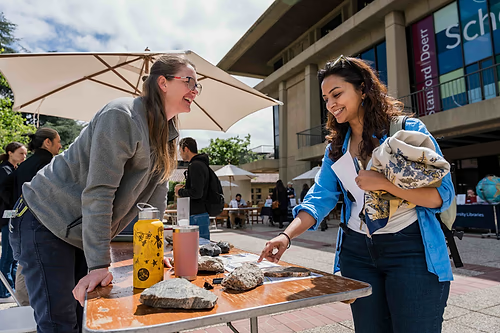
To shape a more sustainable world, the Stanford Doerr School of Sustainability extends learning opportunities and collaboration to students, scholars, solvers, and scalers across the globe. Opportunities include Executive Education, the Sustainability Forum, the Global Sustainability Challenge, Sustainability Undergraduate Research in Geoscience and Engineering, K-12 outreach, and Art and Sustainability.

Discover the latest research and insights shaping the future of sustainability. From groundbreaking research and inspiring milestones, to global forums that bring scholars, students, and leaders together, the Stanford Doerr School of Sustainability is a catalyst for innovation, turning bold ideas into lasting impact.
View all news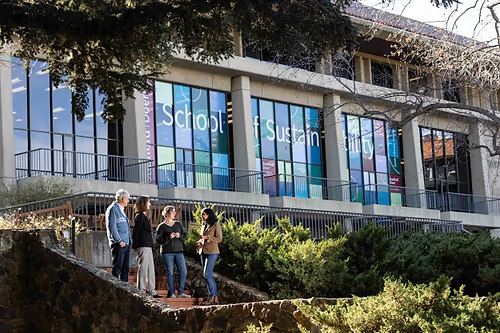
The Stanford Doerr School of Sustainability advances knowledge, solutions, and impact through research and education, creating a thriving, enduring future for humanity and the planet. Its seven departments, two institutes, and Sustainability Accelerator work in concert. Institutes spark innovative environmental and energy research across disciplines, and the Accelerator turns research into scalable technology and policy solutions for urgent global challenges.
Among the takeaways: Investing in safer communities and fire-resilient landscapes is key to reducing future wildfire losses and costs.
Eight teams proposed data center sustainability solutions at a hackathon hosted by the Stanford Sustainability Accelerator. The winning team received a $100,000 grant to develop and scale their idea that could reduce data center energy use while cutting carbon emissions.
Important electric grid decisions must be made amid federal policy uncertainty and growing power demand from AI data centers, electric vehicles, and other uses. Certain investments are most likely to keep costs down, clean energy flowing, and lights on regardless of the policy landscape, according to a new Stanford-led study.
Over the summer, master's student Koto Imahori helped monitor air quality in South San Francisco through the Partnerships for Climate Justice in the Bay program. Her fellowship was supported by the Center for Just Environmental Futures in the Doerr School of Sustainability.
Madalina Vlasceanu, professor of environmental social sciences, reflects on the connection between the climate crisis and systemic societal changes needed to address it after attending New York Climate Week.
