






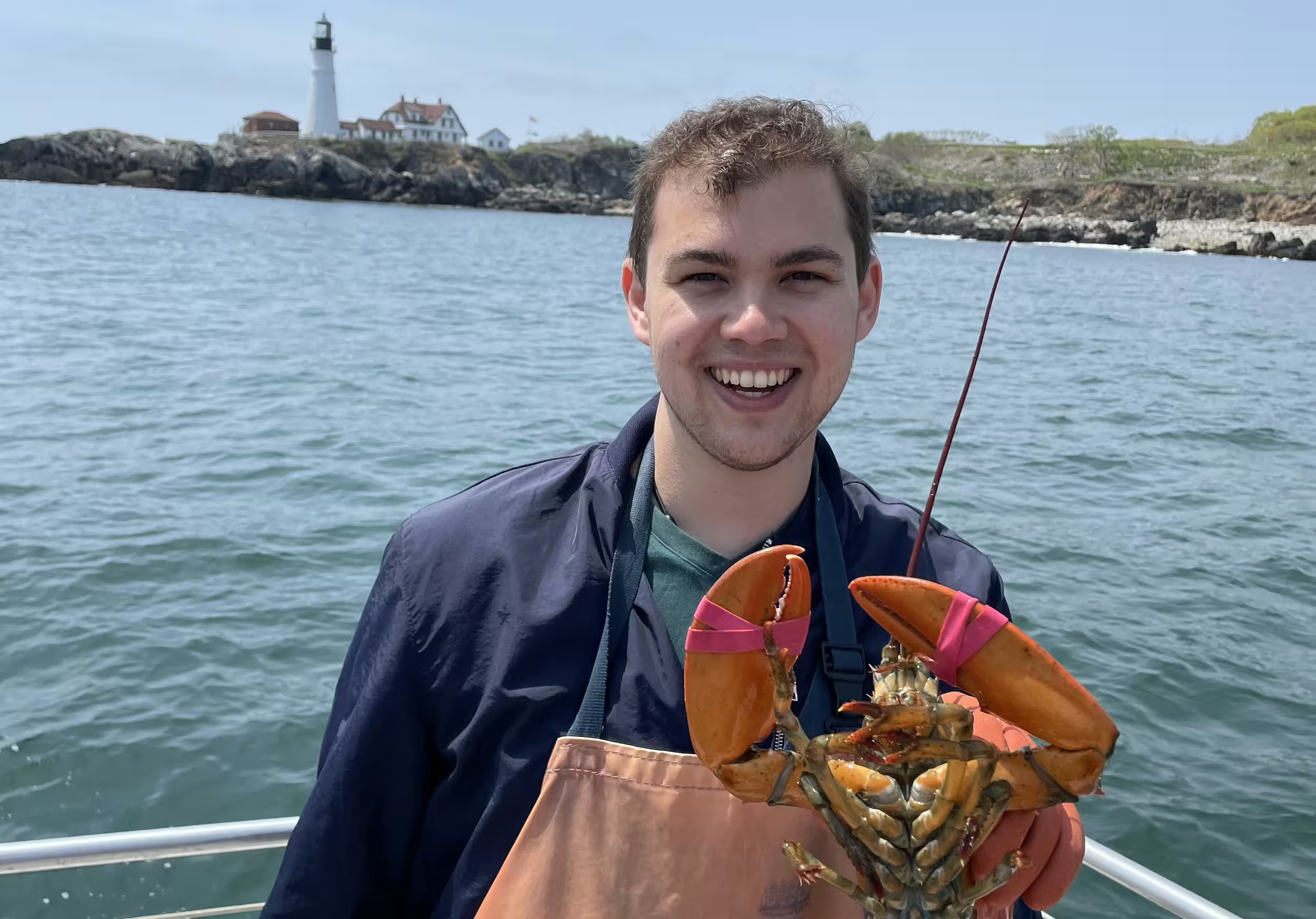
I’m a microeconomist, meaning I study the decisions of individual people or firms. A major theme of my research has been: What do countries’ self-interests lead them to do, and what can you gain by having a coordinated group of countries adopting some common policy or agreement?
I think there’s a lot more to be said about how climate change is going to affect fisheries, both directly and through the responses that policies will create. I’m interested in bringing some quantitative evidence to bear on those questions.
For example, in the Northeast, lobster has been moving north pretty quickly as waters warm, so lobster catch is increasingly coming from Canada. What does it mean for the United States and its lobster industry if we’re losing control of the stock, and for Canada as it gains control?
Another topic I’m working on is managing fishing on the high seas. Within 200 nautical miles of a country’s coastline is its exclusive economic zone, where it has control over the resources in the ocean. Beyond that is the high seas. In South America, this has become a political issue. Vessels from China and Taiwan will fish right outside of Peru’s exclusive economic zone. There’s been a lot of interest recently in port policies to make it harder for those vessels to do that. Any one country changing its port policies might be less effective than a regional bloc coordinating.
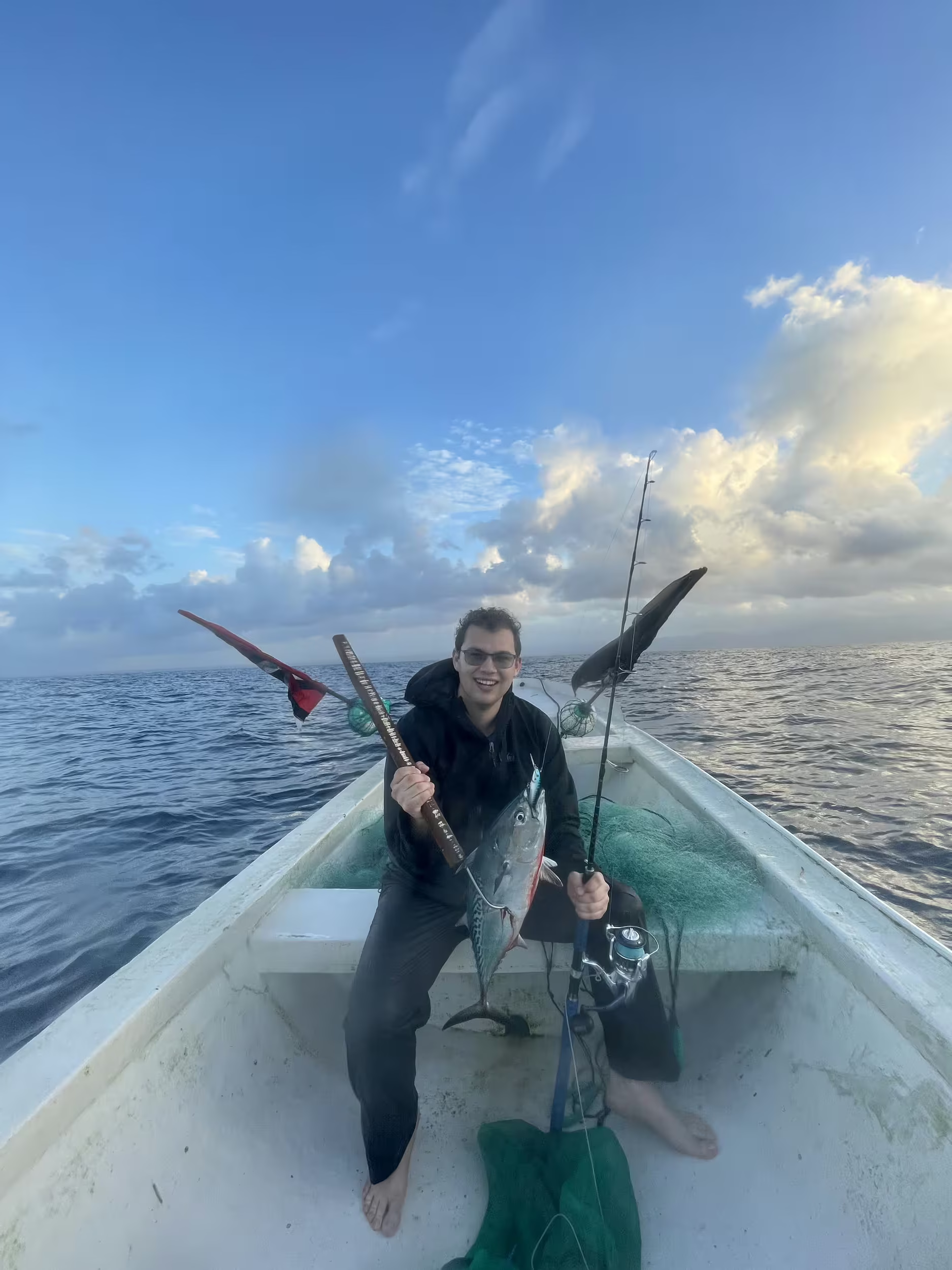
As a quantitative social scientist, I’m mostly on a laptop hunting for data that already exists on things like tuna prices, labor costs, and employment numbers. I’m not usually on a boat collecting new data. However, during my PhD research, I managed to talk my way onto a fishing boat in Indonesia. The fisherman and his son would intermittently make me do stuff, then laugh at me because I was really bad at it. They wanted to give me the biggest tuna we caught that day, and I had to use a translation app to say, “Guys, I wasn’t in it to catch fish. I just wanted to see your process.”
I’ve been interested in the institutions that govern deep-sea mining outside of national jurisdiction, in part because a lot of these institutions are not optimal from a revenue-generating perspective or from an environmental conservation perspective. And I’ve been working on conservation valuation for endangered species in the United States, including marine mammals. These are political, behavioral, and economic problems. You have to understand the human side to make progress on them.
Stanford is unique in having a department where we’re united by a common interest in the ocean, and where bringing foundational insights from one discipline to another is encouraged. It gives me the freedom to expand my research beyond pure economics to topics like these. It is absolutely a dream come true to get to come to a place that studies exactly the niche that I’m interested in.
– As told to Katie Clary
Andrés de Loera is an assistant professor of oceans in the Stanford Doerr School of Sustainability. He is also a center fellow at the Center on Food Security and the Environment, a joint effort of the Freeman Spogli Institute for International Studies and the Woods Institute for the Environment.