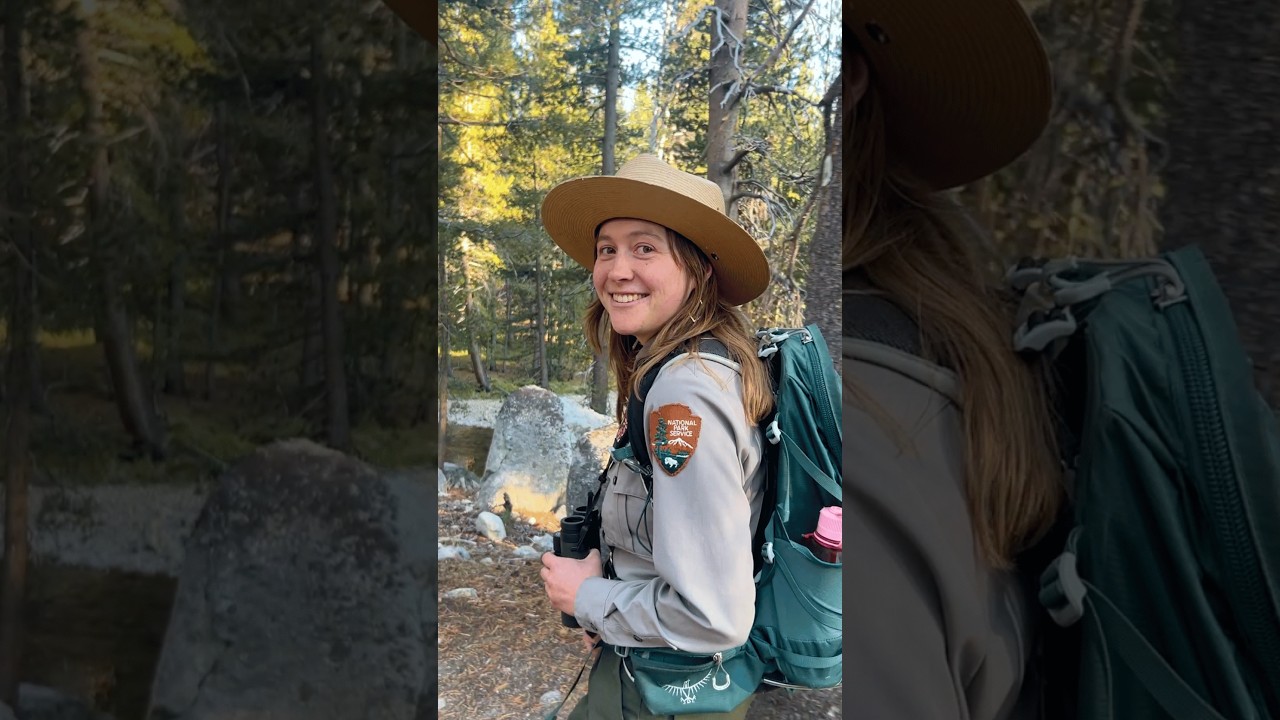

Like many of the animals in Yosemite National Park, Lindsay Filgas, BS ’22, MA ’23, migrates with the seasons.
In summer, she lives and serves as an interpretive park ranger in Yosemite’s high mountains. In winter, she moves to the park’s valley floor and works as an educator for NatureBridge, a nonprofit outdoor environmental science program for young people.
Filgas studied Earth systems at the Stanford Doerr School of Sustainability, earning her bachelor’s degree in 2022 and master’s in environmental communication in 2023. She reflected on her early-career journey from the porch of her tent cabin in Yosemite.
What led you to a career focused on sustainability?
When I got to Stanford, I was interested in environmental communication, which led me to internships with the United Nations Foundation and the Woods Institute for the Environment working on global-scale advocacy campaigns. Then I had three experiences that shifted my path and philosophy: I took the Jasper Ridge docent class, I participated in the Wrigley Field Program in Hawaii, and I volunteered with the National Park Service as an interpreter in Yosemite.
In those programs I was out in nature every day, learning from land stewards, naturalists, and people helping restore native ecosystems. That showed me the power and importance of working at the local level, and shaped my ideas about the most effective way to make change – it’s about interacting in person and engaging with the environment you live in. Now I get to do that every day for my full-time job!
Which skills from your education have proven most valuable so far, and what surprised you that you had to learn on the job?
At Stanford I got to learn so much in so many different fields, but probably the most important thing I learned was how to think critically about information: who is presenting it and how to interpret it.

So much of my role is based on deeply investing in one ecosystem that I’ve had to learn most of it on the job. I’ve been able to apply the frameworks of ecology that I learned at Stanford, but I’ve developed a much deeper knowledge of this one place and all its beautiful nuances, from its native plants and birdsongs to its geology and hydrology.
What does your typical day look like, and what impact do you see from your work?
Depending on the time of year, my life looks pretty different. In the summer, I wake up in my tent cabin, where it’s the same temperature inside as it is outside – it’s an immersive way to live. Then I put on my uniform and head off to wherever I’m working that day.
My work is about deepening people’s Yosemite experience through appreciating the natural world – so even as I’m walking to work, I’m interacting with people. They’ll ask me about a flower they saw, or we’ll watch a family of deer walk by. I work in the visitor center, and every day I lead a ranger program on topics like wildflowers, geology, and history. On a really exciting day, I might lead a campfire talk or a stargazing program, telling stories and teaching people a little bit about the things I love.
This feels like the most meaningful thing I can do with my time. Every day, I get to interact with people who are experiencing awe or surprise or connection. I think that inspiring curiosity and a love for nature can catalyze all the change we might hope to make in the world.
This feels like the most meaningful thing I can do with my time. … I think that inspiring curiosity and a love for nature can catalyze all the change we might hope to make in the world.
What advice would you give students interested in this field?
Don’t feel limited by the jobs you’ve heard of. I thought that to protect the environment, I would live in a city and work on a computer, and that’s one path. But so much more is waiting, needs people, and is important. There’s a whole way of life that I was not really aware of for most of my time in college: You can live in a remote, rural place if you want, work outside, and learn about plants and birds.