
There is no free lunch in life. We need food, we get that food, we change the environment. We need energy, we get that energy, we change the environment. Understanding what drives the trade-offs between meeting our basic needs and affecting nature is at the heart of most of the work I do.
I do a lot of my fieldwork in the Amazon River basin, where well over half of residents live in cities. If we want to understand humanity’s impact on the environment and find solutions to the biodiversity crisis, we need to meet people where they are – and that’s in cities.

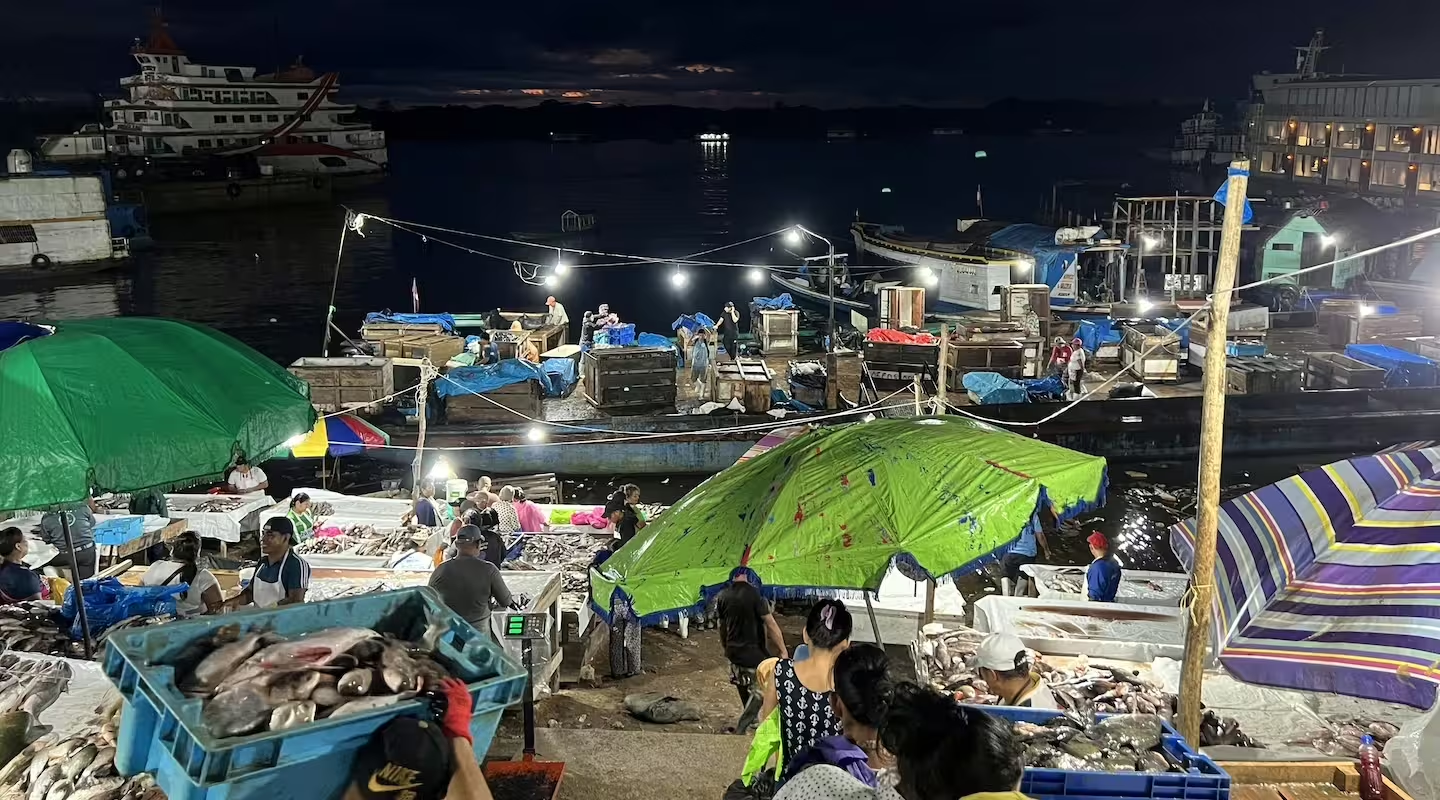
As a PhD student, I spent a lot of time in fish markets in the major Amazonian city of Iquitos, Peru, collecting as many different fish species as possible to analyze their nutrient and mercury content and measure some ecological traits. And what we found is that the most nutritious species are also the least contaminated with mercury from gold mining, and are less vulnerable than other species to over-exploitation. They’re also pretty cheap.
That’s important because the work showed that we can choose “win-win” species for human health and conservation. There are also tangible policy implications to this type of work, in terms of equipping people to make smart food choices. I work closely with NGOs in the Amazon to help translate this scientific knowledge into action that benefits public health.
Recently, my team and I have been using large language models to understand which animal species are embedded in human food systems. We have classified how people use all fish species on Earth and estimate that out of 30,000 fish species globally, people eat about 12,000. We have also analyzed restaurant menus across the U.S. to understand how different cuisines draw on biodiversity. Thai food differs from Japanese food, American food, and so on, in terms of its ingredient list and how those ingredients are put together. With this information, we can estimate the health impacts and environmental footprints of different cuisines, and identify which ecological and cultural factors shape how we use biodiversity.
As I build my lab here at the Stanford Doerr School of Sustainability, I want to make sure my students have opportunities to develop as field scientists and gain the intuition that just analyzing data can’t give you. That face-to-face interaction is what keeps those bonds of trust going with local communities. Doing the science, but also ensuring that the science has on-the-ground impact.
– As told to Katie Clary
Related: Sebastian Heilpern, Assistant Professor of Earth System Science