More than one mile below the surface of the Gulf of Mexico, in a basin so salty and oxygen-starved you would think almost nothing can live there, Emily Paris has found an environment rich in microscopic life.
Paris, who graduated this spring and will begin a postdoctoral position at the Mediterranean Institute of Oceanography in France this fall, spent her graduate years studying life in the Orca Basin, a deep underwater depression located about 170 miles off the coast of Louisiana. Despite the basin’s cold, dark, and extremely salty water, it teems with microbial life.
The basin’s extreme conditions may offer a way to store carbon under the sea, preventing its release to the atmosphere. That possibility has attracted the attention of industry, and in March 2026, the Environmental Protection Agency issued a permit for a company to bury 20 tons of crushed sugarcane stalks in the basin.
While important for climate research, the move may also change the unique environmental conditions that exist in the hypersaline basin.
“Even though Orca Basin is one of our ocean’s most extreme ecosystems, it is full of extraordinary things that are fascinating for fundamental science,” Paris said.
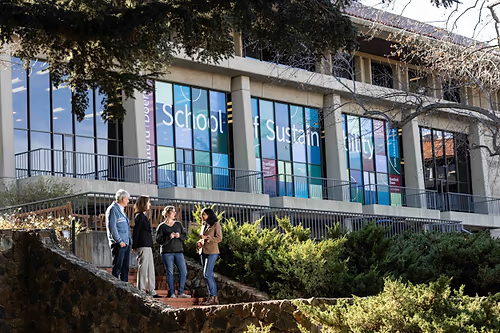
Paris earned her PhD at the Stanford Doerr School of Sustainability in 2026, working with Anne Dekas, associate professor of Earth system science, as part of the NASA-funded Oceans Across Space and Time (OAST) team. The group explores the limits of life in hypersaline brine ecosystems as analogs for the chemistry of early Mars and of extraterrestrial oceans.
“There are microbes in the basin that take up CO2, like plants, but do so without any light. There are clusters of cells that breathe methane gas. The formation of uniquely shaped particles in the interface – the boundary between seawater and salt-saturated brine – could also be key to finding past life on Mars,” Paris said.
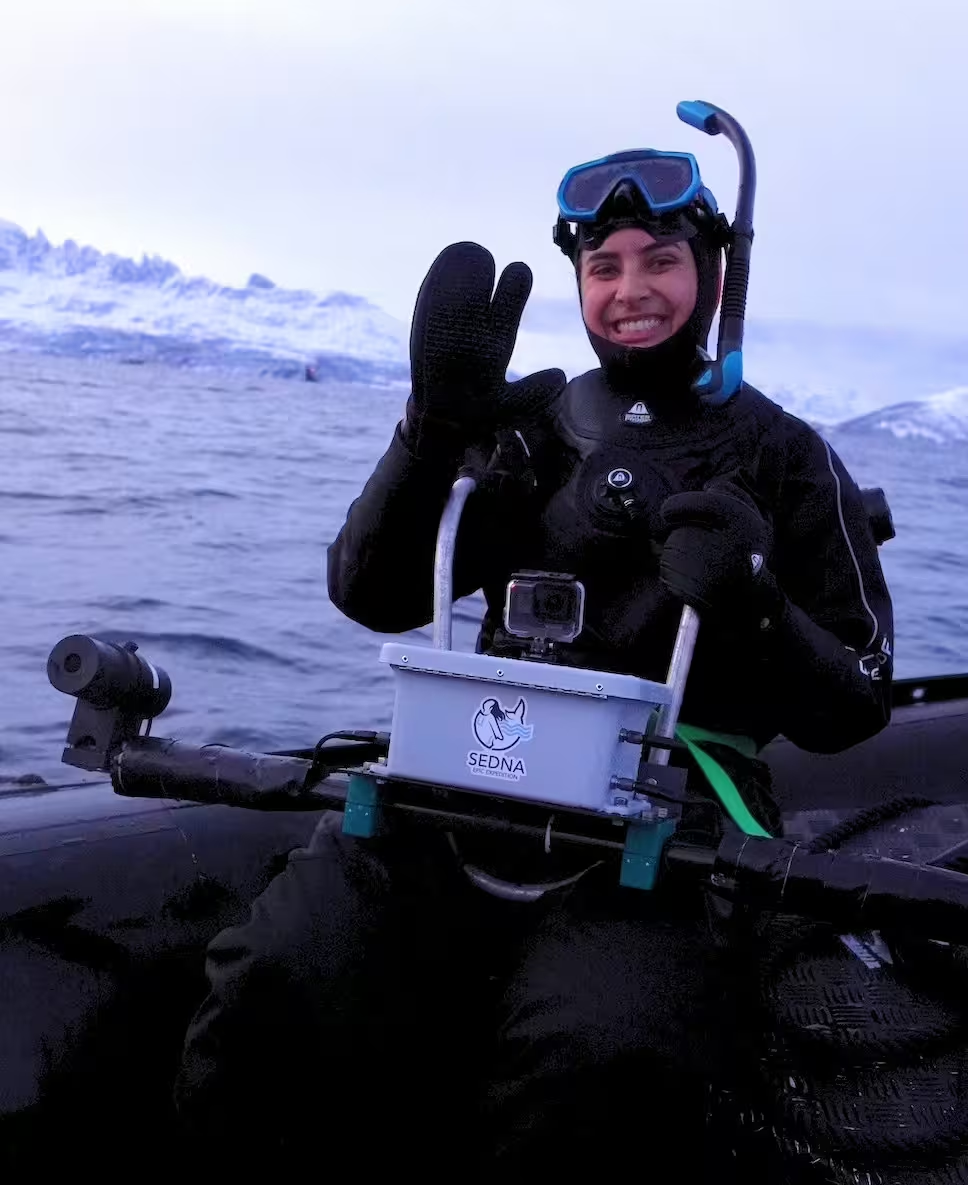
Her first research expedition was to the fjords of Norway, where she snorkeled the icy water to record whale calls. “It made me feel so strong and capable,” Paris said. “It was like, ‘Wow, what else can I do?’”
The experience ignited a passion for research in extreme environments that has taken Paris from freezing waters to acidic brines, and now to the depths of the ocean.
Life in the deep, super-salty sea
The Orca Basin begins nearly 6,000 feet below the surface of the Gulf and slopes hundreds of feet down below the surrounding sea floor. Ancient salt deposits dissolve into it, creating brine roughly eight times saltier than seawater. The brine is so dense, it rarely mixes with the oxygen-rich water above.
Researchers have considered the possibility of using this kind of environment for carbon storage, on the basis that conditions too harsh for microbial life could prevent organic matter from decaying and releasing carbon dioxide. Paris’ research could therefore be vital to informing efforts to store carbon in hypersaline basins like Orca Basin, but the potential side effects of doing so are not yet clear.
“Our planet is warming at an alarming rate, and it’s worth exploring every avenue to figure out how to address it. But at the same time, these environments are so unique and so full of extraordinary processes we don’t yet understand. We don’t really know what the implications of changing them will be,” she said.
Life on other planets
The Orca Basin’s salty, oxygen-depleted environment is similar to those found below the icy crusts of certain moons of Jupiter and Saturn. Understanding which microbes can survive in the basin gives researchers a better sense for what may have lived – or could still live – on those moons or on Mars.
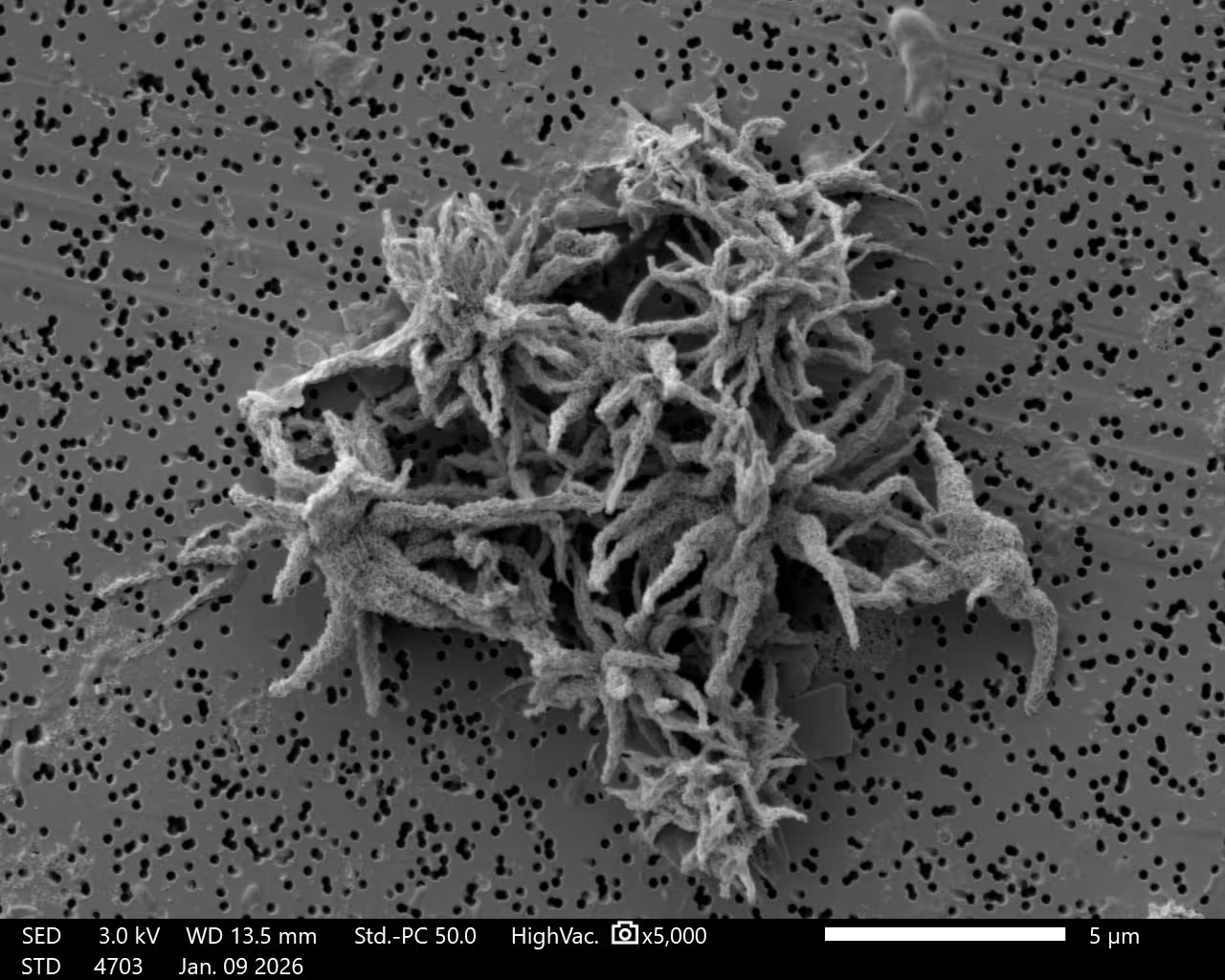
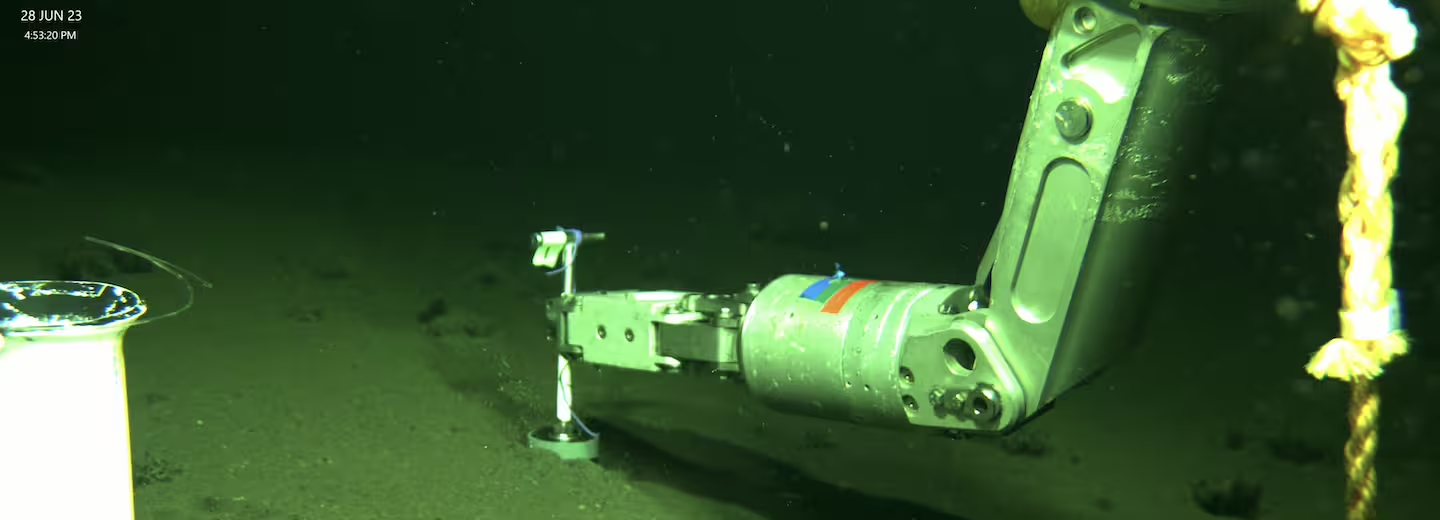
In 2023, Paris and colleagues spent weeks at sea characterizing the basin’s chemistry and measuring microbial activity, using a remotely operated vehicle to collect samples at various depths. Paris also discovered thousands of star-shaped particles made of manganese in the basin’s interface. The same types of particles have been found in similar environments around the world and may be preserved in the rock record. Paris thinks this could indicate an ancient boundary between oxygenated and non-oxygenated water – similar to the layer of the basin that holds the most active life today.
“We think these particles could be a good marker for a habitable zone,” she said. “So if we find them on Mars, that’s a potential sign that life could have existed there. One day, it would be amazing to say, ‘My PhD thesis helped find life on other planets.’”