
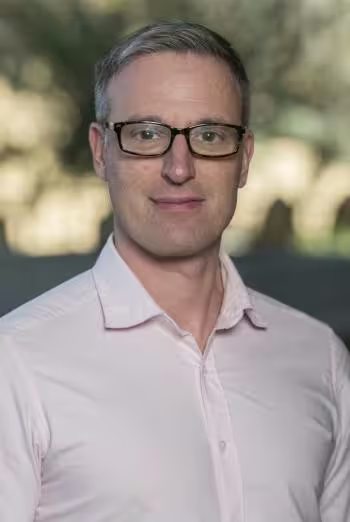
Jef Caers
Professor of Earth and Planetary Sciences and, by courtesy, of Geophysics
Humanity is facing considerable challenges in the 21st century. Population is predicted to grow well into this century and saturate near 10 billion people. As the geological sciences have discovered, Earth and life are deeply and inextricably interwoven and human activity and the change it has wrought is perhaps just the most recent example. If we are to continue to live on this planet, our increasing population will require an increasing amount of resources, such as energy, mineral resources, food and water. In an ideal scenario, we would transform the current unsustainable use of carbon-emitting energy sources, polluting agricultural & mining practices and contaminating & over-exploiting drinking water resources, into a more sustainable and environmentally friendly practice.
My research focuses on assuring 100% renewable energy through development of geothermal energy and critical mineral supply, developing approaches from data acquisition to decision making under uncertainty and risk assessment.
Heat represents a remarkable source of energy that can be used to generate steam, drive turbines and produce power (high enthalpy heat systems). However, the exploitation of geothermal systems is costly and not always successful. Injecting water in kilometer deep wells may end up causing earthquakes. Reducing this subsurface risk is essential to a successful future for geothermal energy. On the other end of the heat spectrum, low enthalpy heat, the shallow subsurface can be used as a heat exchanger, for example through groundwater to heat buildings.
Minerals resources concentrated primarily through the flux of magmas and fluids in Earth are exploited from a large variety of reasons. An increase in its demand will require the development of mining practices that have minimal effect on the environment, such as properly dealing with waste, smart automation of mining operations based on data science and computer vision. This can only be achieved by a better understanding of the subsurface resources itself.